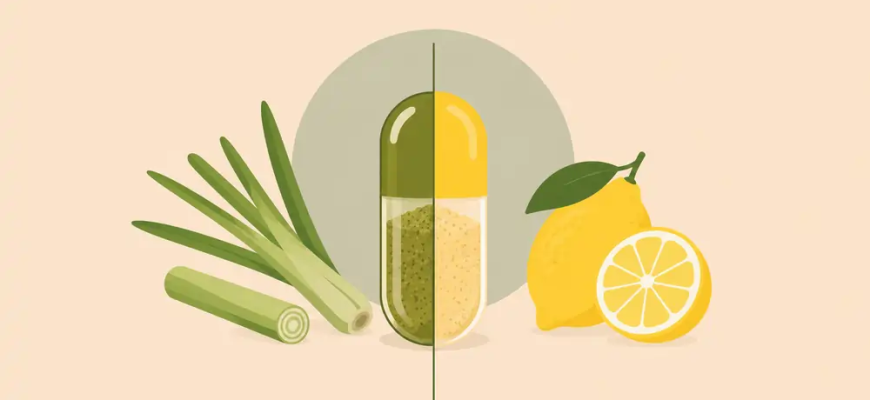
Lemongrass vs Lemon is a common label confusion because both words sound citrus-related. A buyer may see “lemongrass capsules” and expect lemon fruit, vitamin C, citrus peel, lemonade-like taste, or a sour flavor. That expectation is understandable, but it is wrong. Lemongrass is a tropical grass from the Cymbopogon genus. Lemon is a citrus fruit from the Citrus genus.
The name lemongrass describes aroma, not fruit identity. Lemongrass can smell lemony because of aromatic compounds, but it is not a lemon fruit supplement. Secrets Of The Tribe treats this as product-label literacy: when a plant name contains a familiar food word, buyers should still check the botanical name, plant part, product format, and Supplement Facts panel.
This article does not provide medical advice. Lemongrass capsules, lemon products, citrus extracts, teas, tinctures, powders, and supplements are not intended to diagnose, treat, cure, or prevent vitamin deficiency, digestive issues, inflammation, infections, immune conditions, skin concerns, metabolic conditions, or any disease. If you are pregnant or breastfeeding, under 18, taking medication, preparing for surgery, managing a health condition, or unsure whether lemongrass supplements are appropriate for you, ask a qualified healthcare professional before use.
- Is Lemongrass the Same as Lemon?
- Quick Comparison: Lemongrass vs Lemon
- Why Does Lemongrass Have “Lemon” in the Name?
- What Is Lemongrass?
- What Is Lemon?
- Why Lemongrass Capsules Are Not Lemon Supplements
- Why Vitamin C Logic Does Not Apply Automatically
- Lemon Fruit Logic vs Lemongrass Capsule Logic
- Why Lemongrass Does Not Taste Like Lemonade
- Why Capsules Change the Sensory Experience
- Why Lemongrass Tea Feels More Aromatic Than Capsules
- Why Botanical Name Matters
- Why Plant Part Matters
- Why Essential Oil Is a Separate Category
- Why “Citrusy” Does Not Mean Citrus Fruit
- Why Buyers Expect Lemon From Lemongrass
- Why Food Logic Can Mislead Supplement Buyers
- What to Check on a Lemongrass Capsule Label
- When Lemon May Appear in a Lemongrass Product
- Who Should Be Careful With Lemongrass Supplements?
- Lemongrass vs Lemon Checklist
- Check the Plant Type
- Find the Botanical Name
- Read the Plant Part
- Do Not Assume Vitamin C
- Do Not Expect Lemonade Taste
- Check Product Format
- Review Other Ingredients
- Check Product Integrity
- Ask When Health Context Matters
- Common Mistakes to Avoid
- Thinking Lemongrass Is Lemon Fruit
- Expecting Vitamin C Logic
- Expecting Sour Flavor
- Ignoring Botanical Name
- Treating Essential Oil Like Capsules
- FAQ
- Is lemongrass the same as lemon?
- Why is it called lemongrass?
- Do lemongrass capsules contain lemon?
- Are lemongrass capsules a vitamin C supplement?
- What botanical name should I look for?
- What botanical name identifies lemon?
- Do lemongrass capsules taste like lemonade?
- Is lemongrass essential oil the same as lemongrass capsules?
- What should I check before buying lemongrass capsules?
- Glossary
- Lemongrass
- Lemon
- Cymbopogon
- Cymbopogon citratus
- Citrus limon
- Botanical Name
- Plant Part
- Supplement Facts
- Essential Oil
- Vitamin C
- Conclusion
- Sources
Is Lemongrass the Same as Lemon?
No. Lemongrass and lemon are different plants.
Lemongrass usually refers to Cymbopogon species, especially Cymbopogon citratus in many culinary and herbal contexts. Lemon usually refers to Citrus limon, the familiar yellow citrus fruit.
The shared “lemon” sound points to aroma, not botanical identity.
Quick Comparison: Lemongrass vs Lemon
| Feature | Lemongrass | Lemon |
| Plant type | Tropical grass | Citrus fruit tree |
| Common botanical name | Cymbopogon citratus | Citrus limon |
| Common product form | Tea, dried herb, powder, capsule, extract, essential oil | Fruit, juice, peel, zest, extract, vitamin C products |
| Main sensory cue | Lemony, grassy, herbal, fresh aroma | Sour, juicy, citrus, acidic fruit taste |
| Main buyer mistake | Expecting lemon fruit logic | Assuming all lemony plants are citrus fruits |
Why Does Lemongrass Have “Lemon” in the Name?
Lemongrass has “lemon” in the name because the plant has a lemon-like aroma.
The name does not mean the plant grows lemons, contains lemon juice, or comes from the citrus family. It means the grass can smell bright, fresh, and citrusy when cut, brewed, crushed, or processed.
Common names often describe sensory impressions. They do not always describe botanical identity.
What Is Lemongrass?
Lemongrass is a tall, aromatic tropical grass. In food and herbal products, the name often refers to Cymbopogon citratus.
The plant is widely used in teas, soups, broths, curries, marinades, spice blends, aromatherapy products, dried herb products, capsules, and extracts. Its scent can feel lemony, green, grassy, floral, and slightly sharp.
In capsules, lemongrass is usually presented as dried herb powder or extract, not citrus fruit powder.
What Is Lemon?
Lemon is a citrus fruit, usually identified as Citrus limon.
Lemon products may use fruit juice, peel, zest, pulp, extract, essential oil, or vitamin C-related positioning. Lemon tastes sour because of its acidic fruit juice. It is used in drinks, cooking, desserts, cleaning aromas, and citrus-flavored products.
That fruit logic should not be applied automatically to lemongrass capsules.
Why Lemongrass Capsules Are Not Lemon Supplements
Lemongrass capsules are not lemon supplements because they do not come from lemon fruit.
A lemongrass capsule may contain powdered Cymbopogon plant material or an extract from the grass. It should not be expected to provide the same taste, fruit acids, peel compounds, or vitamin C positioning as lemon products.
If a buyer wants lemon fruit, the label should say lemon, Citrus limon, lemon peel, lemon juice powder, or vitamin C source.
Why Vitamin C Logic Does Not Apply Automatically
Lemon is strongly associated with vitamin C in consumer memory. Lemongrass should not be treated the same way.
A lemongrass capsule label should be read as a botanical supplement label. If it does not list vitamin C in the Supplement Facts panel, do not assume the product is intended as a vitamin C supplement.
The word “lemon” inside lemongrass is not a nutrient claim.
Lemon Fruit Logic vs Lemongrass Capsule Logic
| Buyer Expectation | Lemon Product | Lemongrass Capsule |
| Vitamin C association | Common consumer expectation | Only relevant if listed on label |
| Sour taste | Typical of lemon juice | Not expected from swallowed capsules |
| Citrus peel logic | May apply to lemon peel products | Does not apply unless citrus is included |
| Lemonade flavor | Food or drink expectation | Not a capsule expectation |
| Botanical identity | Citrus limon | Cymbopogon species |
Why Lemongrass Does Not Taste Like Lemonade
Lemongrass can smell lemony, but it does not taste like lemonade.
Lemonade gets its taste from lemon juice, water, sweetness, acidity, and sometimes peel aroma. Lemongrass has a grassy, herbal, citrus-like aroma without the same sour fruit juice profile.
A capsule reduces taste even more because it is usually swallowed whole.
Why Capsules Change the Sensory Experience
Capsules are designed to hide taste and simplify serving. That means the user may not experience much aroma or flavor at all.
A lemongrass tea can smell bright because hot water releases aromatic compounds. A fresh lemongrass stalk smells strong when cut or bruised. A capsule keeps the powder enclosed inside a shell.
Do not expect a capsule to behave like tea, lemon juice, or a fresh herb stalk.
Why Lemongrass Tea Feels More Aromatic Than Capsules
Lemongrass tea releases aroma into hot water and steam. The nose detects that aroma while the person drinks.
Capsules usually bypass the mouth and nose. The aromatic material is inside the capsule shell and swallowed with water.
That is why a lemongrass capsule may smell mild even if it contains real lemongrass powder.
Why Botanical Name Matters
The botanical name helps prevent name confusion.
For lemongrass, look for Cymbopogon citratus or another clearly identified Cymbopogon species. For lemon, look for Citrus limon. If a label says only “lemon” or “lemongrass,” the buyer may need more context.
Botanical names are especially useful when common names sound similar.
Why Plant Part Matters
Plant part tells you what material is inside the product.
Lemongrass products may use leaf, aerial parts, stem, powder, extract, dried herb, or essential oil. Lemon products may use juice, peel, zest, fruit powder, or oil.
A clear label should identify the plant part or preparation type.
Why Essential Oil Is a Separate Category
Lemongrass essential oil is not the same as lemongrass capsules, tea, or dried herb powder.
Essential oils are concentrated aromatic products. They should not be treated like ordinary supplement capsules or culinary herbs. Lemon essential oil is also different from lemon juice or lemon peel powder.
Same scent family does not mean same product category.
Why “Citrusy” Does Not Mean Citrus Fruit
Many plants smell citrusy without being citrus fruits. Lemongrass is one of the best examples.
A citrus-like aroma can come from aromatic compounds that remind the nose of lemon. That does not make the plant part of the Citrus genus.
Flavor language and botanical identity are different things.
Why Buyers Expect Lemon From Lemongrass
Buyers expect lemon from lemongrass because the word is familiar. Lemon is a common food, drink, flavor, cleaning aroma, and vitamin C reference point.
Lemongrass looks less familiar to many shoppers. So the mind anchors on the word lemon and fills in the rest with citrus assumptions.
That shortcut leads to wrong expectations about capsules.
Why Food Logic Can Mislead Supplement Buyers
Food logic says lemon means sour, juicy, acidic, and citrusy. Supplement label logic asks what plant, what part, what format, what serving, and what warnings.
Lemongrass capsules should be judged by the Supplement Facts panel, botanical name, plant part, capsule ingredients, storage directions, expiration date, and lot number.
Secrets Of The Tribe takes a cautious editorial stance here: familiar flavor words should not replace label reading.
What to Check on a Lemongrass Capsule Label
Start with the botanical name. Look for Cymbopogon citratus or another clearly named Cymbopogon species.
Then check plant part, serving size, powder or extract type, capsule material, other ingredients, suggested use, warnings, storage instructions, expiration date, and lot number.
If the label does not identify the plant clearly, ask the brand before buying.
When Lemon May Appear in a Lemongrass Product
Some products may combine lemongrass with lemon peel, lemon flavor, lemon oil, citrus bioflavonoids, or vitamin C. That is a different formula.
Do not assume lemon is present unless it appears in the ingredient list or Supplement Facts panel.
Lemongrass alone does not equal lemon fruit.
Who Should Be Careful With Lemongrass Supplements?
Extra caution matters for people who are pregnant or breastfeeding, under 18, taking medication, preparing for surgery, using several supplements, or managing a health condition.
People with grass allergies, fragrance sensitivity, or reactions to botanical products should also be cautious.
Ask a qualified healthcare professional if personal context makes supplement use uncertain.
Lemongrass vs Lemon Checklist
Use this checklist before buying lemongrass capsules or comparing them with lemon products. The goal is to avoid confusing lemon-like aroma with lemon fruit identity.
Check the Plant Type
Lemongrass is a tropical grass. Lemon is a citrus fruit.
Find the Botanical Name
Look for Cymbopogon citratus for lemongrass and Citrus limon for lemon.
Read the Plant Part
Check whether the product uses leaf, aerial parts, stem, peel, juice, fruit powder, extract, or oil.
Do Not Assume Vitamin C
Only treat a product as a vitamin C supplement if vitamin C appears on the label.
Do Not Expect Lemonade Taste
Lemongrass may smell citrusy, but capsules do not taste like lemonade.
Check Product Format
Capsule, tea, tincture, powder, essential oil, fruit juice, and peel extract are different formats.
Review Other Ingredients
Look for added lemon, citrus flavor, vitamin C, sweeteners, capsule material, or blend ingredients.
Check Product Integrity
Avoid capsules with broken seals, moisture, mold, rancid odor, damaged capsules, or expired dates.
Ask When Health Context Matters
If you take medication or have a health condition, ask a qualified professional before use.
Common Mistakes to Avoid
Thinking Lemongrass Is Lemon Fruit
Lemongrass is a Cymbopogon grass, not a Citrus limon fruit.
Expecting Vitamin C Logic
The word lemon in lemongrass is not a vitamin C claim.
Expecting Sour Flavor
Lemongrass is citrusy and herbal, not lemon juice.
Ignoring Botanical Name
Common names can confuse buyers when they sound like familiar foods.
Treating Essential Oil Like Capsules
Essential oil is a concentrated aromatic product and should not be treated like capsule powder.
FAQ
Is lemongrass the same as lemon?
No. Lemongrass is a tropical grass, while lemon is a citrus fruit.
Why is it called lemongrass?
It is called lemongrass because it has a lemon-like aroma, not because it is lemon fruit.
Do lemongrass capsules contain lemon?
Not unless lemon appears in the ingredient list or Supplement Facts panel.
Are lemongrass capsules a vitamin C supplement?
No. Do not assume vitamin C unless the label lists vitamin C.
What botanical name should I look for?
Look for Cymbopogon citratus or another clearly named Cymbopogon species.
What botanical name identifies lemon?
Lemon is commonly identified as Citrus limon.
Do lemongrass capsules taste like lemonade?
No. Capsules are usually swallowed and should not be expected to taste like lemonade.
Is lemongrass essential oil the same as lemongrass capsules?
No. Essential oil is a concentrated aromatic product, while capsules contain powder, extract, or a supplement formula.
What should I check before buying lemongrass capsules?
Check botanical name, plant part, serving size, product format, other ingredients, warnings, storage, expiration date, and lot number.
Glossary
Lemongrass
A tropical aromatic grass from the Cymbopogon genus with a lemon-like scent.
Lemon
A citrus fruit commonly identified as Citrus limon.
Cymbopogon
A genus of aromatic grasses that includes lemongrass species.
Cymbopogon citratus
A botanical name commonly associated with lemongrass used in food and herbal products.
Citrus limon
The botanical name commonly associated with lemon fruit.
Botanical Name
The scientific name that identifies a plant more precisely than a common name.
Plant Part
The part of a plant used in a product, such as leaf, stem, aerial parts, peel, juice, or extract.
Supplement Facts
The label panel that lists serving size and dietary ingredients in a supplement product.
Essential Oil
A concentrated aromatic product from plant material, not interchangeable with tea, capsules, or juice.
Vitamin C
An essential nutrient commonly associated with citrus fruits, but not implied by the word lemongrass.
Conclusion
Lemongrass vs Lemon is a name confusion, not a small detail. Lemongrass capsules are made from aromatic grass material, not lemon fruit, so buyers should check botanical name, plant part, format, and label facts before applying citrus assumptions.
Sources
Lemongrass botanical profile and Cymbopogon citratus accepted species information, Plants of the World Online / Royal Botanic Gardens, Kew – powo.science.kew.org/taxon/urn:lsid:ipni.org:names:396713-1
Lemon botanical profile and Citrus limon accepted species information, Plants of the World Online / Royal Botanic Gardens, Kew – powo.science.kew.org/taxon/urn:lsid:ipni.org:names:59662-2
Dietary supplement labeling guidance, Dietary Supplement Labeling Guide – fda.gov/food/dietary-supplements-guidance-documents-regulatory-information/dietary-supplement-labeling-guide
Lemongrass culinary and botanical overview, Encyclopaedia Britannica – britannica.com/plant/lemongrass
Lemon fruit overview and citrus context, Encyclopaedia Britannica – britannica.com/plant/lemon
Vitamin C consumer information and citrus-food context, Office of Dietary Supplements / National Institutes of Health – ods.od.nih.gov/factsheets/VitaminC-Consumer
Dietary supplement consumer guidance and Supplement Facts label basics, Questions and Answers on Dietary Supplements – fda.gov/food/information-consumers-using-dietary-supplements/questions-and-answers-dietary-supplements
Dietary and herbal supplement safety overview, Dietary and Herbal Supplements – nccih.nih.gov/health/dietary-and-herbal-supplements